Promising Tomorrows will bring together many of the creative people who helped build Space Mountain around the world, New Tomorrowland at the Magic Kingdom, and other attractions. Attendees will hear from all of these special guests at the event.
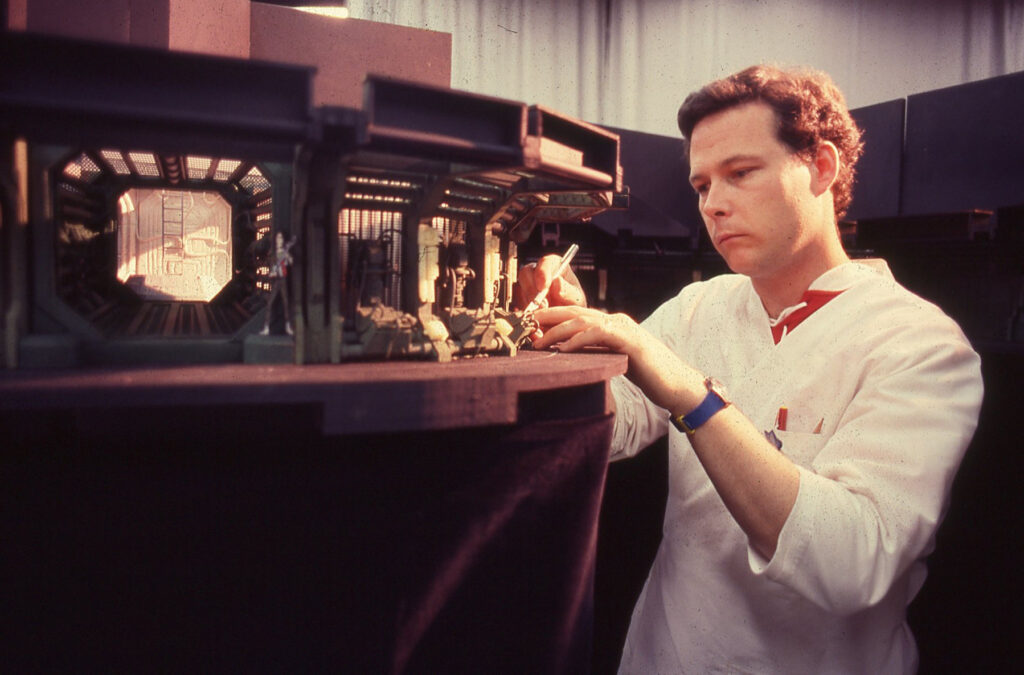
Paul Osterhout
Paul was originally hired in 1980 as a production designer for EPCOT Center where he worked on all of the Future World pavilions. He was hired as a Production Designer for the Disney-MGM Studios where he provided design and art direction for The Great Movie Ride, Superstar Television, and the Monster Sound Show. Before the park was finished, he was promoted to Producer where he was the lead creative on Star Tours and MuppetVision 3D. He was also the Producer on Rock ‘N’ Roller Coaster starring Aerosmith.
Paul also produced New Tomorrowland (and in fact is the voice of the teenage boy in the last scene of Walt Disney’s Carousel of Progress) and a number of projects for the Magic Kingdom.
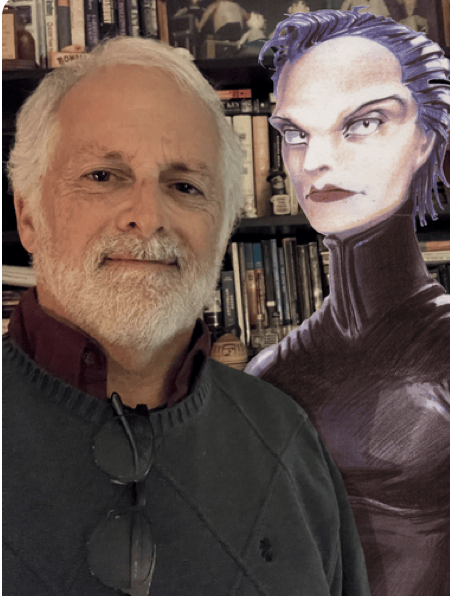
Dan Molitor
Daniel Molitor is a writer and creative director with over 35 years of experience developing themed attractions, museum exhibits, specialty films, videos, and interactive experiences.
He began his career as a writer at Walt Disney Imagineering, where for over a decade he was a key player on teams that created attractions such as Buzz Lightyear’s Space Ranger Spin and The Extraterrorstrial Alien Encounter. While at Disney, he helped to create Port Discovery (an innovative children’s museum in Baltimore) and has developed experiences for The Smithsonian, The Museum of Tolerance, and other world-class institutions. Recent projects include concept development for theme parks, public memorials, and international resorts.
Daniel is the author of seven published books, including his latest, a graphic novel about his father’s experiences during the Korean War. He serves on the board of directors of the San Gabriel Valley Literacy Council and teaches English to adult learners.
Molitor graduated magna cum laude with a Bachelor of Arts degree from the University of Southern California School of Journalism.
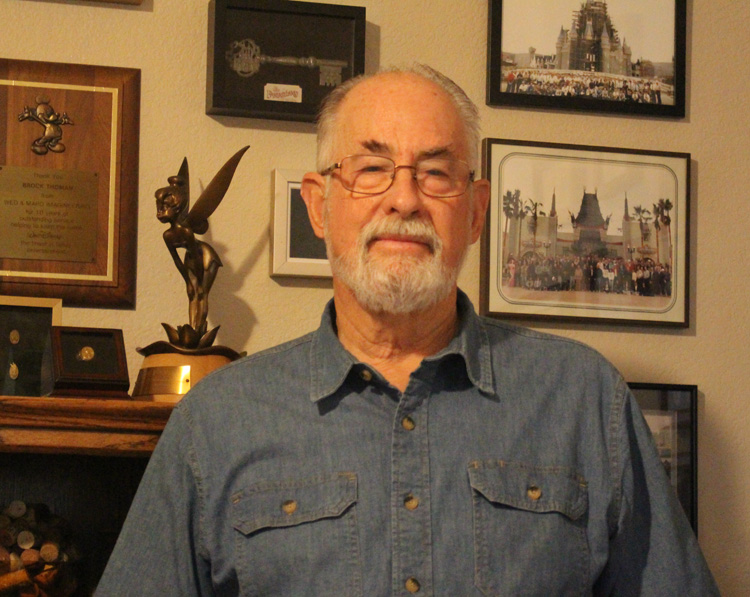
Brock Thoman
Brock Thoman began his Disney career at Walt Disney Imagineering (then called WED Enterprises) in June of 1972, just after graduating with a degree in Architecture from Cal Poly, San Luis Obispo. He started in Architectural Drafting Department and worked on Space Mountain both at Magic Kingdom and Disneyland Park. After a couple of years, he transferred into the Show Set Design Department where he worked on several attractions, including early development of EPCOT Center shows, including Spaceship Earth. Eventually, he became one of the Concept Designers and the Show Set lead for the new Snow White’s Scary Adventures in New Fantasyland at Disneyland. At the same time, he was the Show Set lead for the dinosaur diorama in the Universe of Energy pavilion at EPCOT Center. He was then approached to relocate to Japan to head up the entire show set installation at Tokyo Disneyland. After returning from Japan, he went back to The Living Seas project, which had been put on hold to be part of the second phase of EPCOT Center, as the lead show set designer. He oversaw the design, construction and installation of all the sets for Sea Base Alpha.
He was then approached to work as the lead Show Set Designer and Concept Facility Designer for the Great Movie Ride for the new Studio Tour park, including the reproduction of the Hollywood Chinese Theater. After design was completed, he and his family relocated to Florida, where he helped oversee the facility construction for the Great Movie Ride and the installation of the Chinese Theater facades, while at the same time, overseeing the installation of the show sets for the Great Movie Ride, including working with the WDW ride operations team to work out the show ride timing. After the opening of the park, he was asked to stay and assist Paul Osterhout with the installation and construction of the Star Tours show and the Ewok Village queue.
Returning to California, he worked on concepts for the Studio Tour park that was being designed for Disneyland Paris in France. When that park was postponed, he was assigned as Show Producer for, what was dubbed Snow White ’94, a redesign of the Snow White ride at Walt Disney World Magic Kingdom. It was the first time that any of the Snow White rides had a happy ending.
Next, he was assigned as a Show Set lead on Tokyo DisneySea for Japan, eventually being promoted to Show Producer for Mysterious Island, overseeing the design and development of the “Magellan’s” and the “Journey to the Center of the Earth” ride.
It had long been a dream of Brock’s to live in the Eastern Sierras, a place he had vacationed in for many years as a boy and later with his own family. He and his wife even honeymooned in the same area after their marriage in September 1972. So, in 1997, Brock and his wife Diane, bought and began to operate a Bed and Breakfast just south of the Mammoth Lakes ski resort in Central California. Brock continued to work at WDI for the next four years, spending his weekends running the Bed and Breakfast and his week days overseeing design and development for Discovery Bay. When that project relocated to Japan for installation, he took on his last assignment at Disney, Creative Show Designer for Pooh’s Hunny Hunt at Tokyo Disneyland. With the successful completion of that show, Brock left WDI in 2001, after 29 years, to pursue his Sierra mountains dream, running the bed and Breakfast for another 20 years, finally retiring in 2021 and moving back to Southern California near the Temecula wine country.

David Inglish
David Inglish began his professional career in the entertainment industry in 1967 at Walt Disney Imagineering, then known as WED Enterprises, building show control equipment at MAPO for the Tomorrowland Expansion at Disneyland including the GE Carousel of Progress and Flight to the Moon. He became part of the WED team designing equipment and installing The Haunted Mansion at Disneyland in 1969 and then as part of the Show Engineering group responsible for the installation of all shows at the opening of Walt Disney World in Florida in 1971.
He returned to Florida several times during the subsequent years for extended periods as part of the groups installing the Pirates of the Caribbean, Space Mountain, GE Carousel of Progress and The Walt Disney Story. During that same period, Inglish had a similar role for the design and installation of show control and audio equipment at Disneyland for The Country Bear Jamboree, Space Mountain, America Sings, The Walt Disney Story, Great Moments with Mr. Lincoln and The Space Stage live event venue.
In 1978, he was asked to work with the Walt Disney Studios as part of Don Iwerks’ group to engineer and install a specialized camera system called the Automated Camera Effects System (ACES) for miniature visual effects photography on the film, “The Black Hole.” That accomplishment led to further camera and motion control system work for the motion picture, “TRON.”
As the Chief Electronics Engineer for Don, he was part of the group that designed, built and installed over 225 film projection control systems for 16mm, 35mm, 70mm and IMAX® and more than 1200 specialized visual effects projectors for Epcot Center in Florida and Tokyo Disneyland in Japan. He traveled to both Florida for the supervision of those installations and briefly to Tokyo, Japan. This same group designed and built all the innovative 35mm and 65mm conventional, multi-screen and 3D motion picture cameras and film printers needed for the related film shows in both theme parks.
In the mid-1980s, Inglish presented an idea to Roy Disney advocating the conversion of Disney’s animation production ink and paint/conventional film camera pipeline to a digital process. This led to a development proposal for the Computer Animation Production System, better known as CAPS. Those in his group also foresaw the need to implement CGI/3D environments with the ability to achieve effects and multiplane-like scenes as part of this development. CAPS subsequently won an Academy Award in 1991.
He led the Animation Technology group that focused on direct production support and enhanced tools for all animation departments. His team invented a color-correct light source providing uniform screen illumination for the KEM flatbed editor and implemented advanced video conferencing systems to connect artists in studios in Los Angeles, Orlando (part of the MGM Studio Tour theme park) and Paris Feature Animation Studio in the early-1990s.
David Inglish’s feature film credits include, “TRON,” “Beauty and the Beast,” “The Lion King,” “Aladdin”, “Trail Mix-up” Roger Rabbit – short, “The Lion King”, “Runaway Brain” Mickey Mouse – short and “Pocahontas” in various technical and management roles as well as Producer of the Disney Late Night Group computer animated film, “OILSPOT AND Lipstick” (1987)” – first Disney CGI short. During his nearly 30 years at Disney he held a variety of positions with responsibilities in engineering, facilities, technical operations and production. He was awarded U.S. patents for his contributions to ACES and the color-correct light source for the KEM.
In 1996, he moved to Universal Studios as Director of Audio Video Technology where he provided the engineering, installation and operation of systems needed for film and video production for Universal Pictures and other corporate entities. This included engineering and installation of a new and modernized studio-wide cable television system with fiber optic connectivity and encrypted HD content from the stages to production company offices to allow remote real time viewing of production in progress.
Inglish joined the Academy of Motion Pictures Arts and Sciences (AMPAS) in 1992 and has served in the Visual Effects Branch since its inception as well as having been a longtime member of the Science and Technical Awards Committee. In 2003, he was one of the founding members of the Academy’s Science and Technology Council and served on it for nine years. David was awarded the “John A. Bonner Medal of Commendation” by the AMPAS Board of Governors in 2008. He is currently a member of the Science and Technology Council Technical History Subcommittee.
His most current project is a collaboration with Disney Legend Don Iwerks to research, assemble and preserve the history and original documents related to the development and use by Ub Iwerks of the Sodium Traveling Matte process for the film, “Mary Poppins” and visual effects for many other Disney films that followed it.
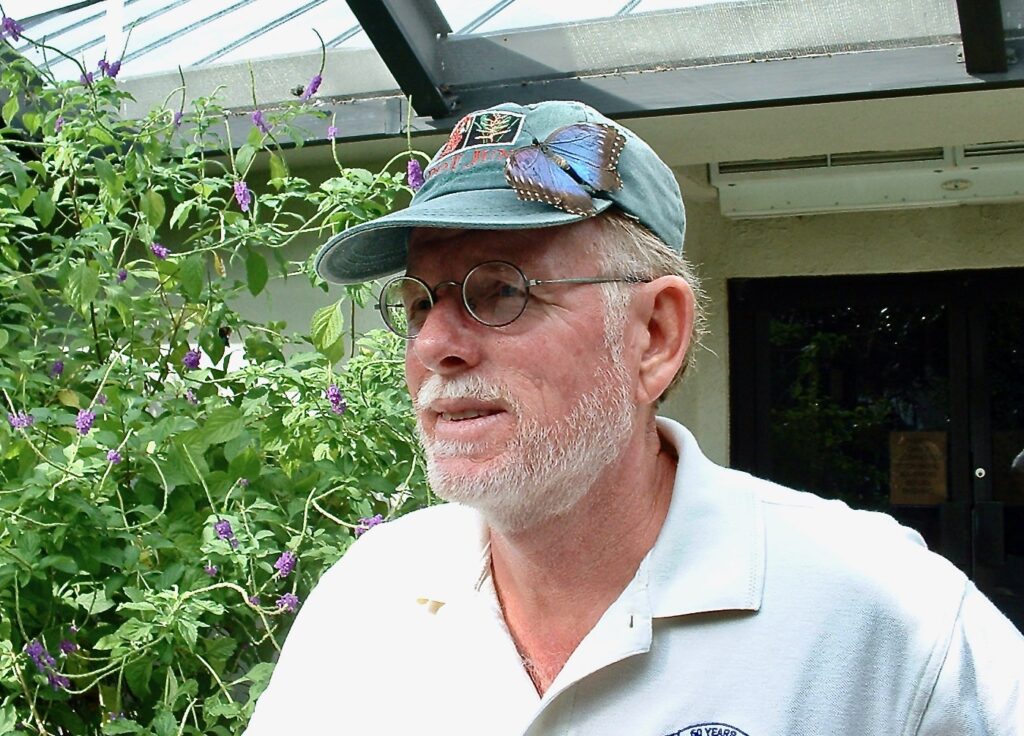
Ron Carman
Ron began his career at WED Enterprises on December 9, 1968. He was hired to work in the warehouse but had the opportunity to meet John Wise, VP of Engineering. Carman spent his first three years assisting the Project Engineers in processing all the shop drawings, release of all the construction drawing packages, transmitting all the construction RFI’s (Requests For Information) from the Construction Contractors to the various Engineers and Architects and returned the responses to the Contractors. He spent another year in Engineering drafting the structural drawings for Country Bear Jamboree at Disneyland and then was offered a new position, Project Planner.
Working with input and assistance from BVCC Scheduling, Ron prepared the Show and Ride fabrication, installation, and test & adjust schedule integrating that into the overall project schedule for Space Mountain, Walt Disney’s Carousel of Progress, and the WEDway PeopleMover. At the completion of these projects, he was recruited to join the Accounting Department filling an open position of Project Accountant.
Some of the projects he was involved with included Space Mountain at Disneyland, Captain EO, and the original Star Tours. Ron then prepared a proposal to start a Show and Ride Manufacturing Estimating Department. With his team, Ron prepared the entire Tokyo Disneyland Show/Ride manufacturing budget. With EPCOT then taking off, Carman was asked to assist in forming a new department of Project Finance Managers. He then assumed the position of EPCOT Master Planner and Scheduling Manager, and four to six weeks later his team had published all of the schedules for the entire EPCOT project.
Ron eventually accepted the position of Project Manager for the entertainment portion of the Disney-MGM Studios. Those attractions included The Great Movie Ride, Superstar Television, The Monster Sound Show, and the Epic Theater. Carman passed responsibilities on for all of these attractions except the Epic Theater, which eventually was green-lit to to use Indiana Jones as the storyline for the show.
After leaving Disney, Ron held various positions at Mitsubishi, Sony Entertainment, Gensler and Universal Studios. There he became the Project Director for Jurassic Park at the Islands of Adventure theme park. His final project was Universal’s Dubai Theme Park, but unfortunately after a year of design, the great economic crash of 2008 caught up with the project.

Tim Delaney
Tim Delaney was born in Glendale, California, the same city that is the home of Walt Disney Imagineering. Being from So. California allowed many annual family trips to Disneyland where a passion for the Park added to the existing passion that was previously started by Walt Disney’s television show DISNEYLAND. Walt’s TV show inspired a passion for the “future” through his Tomorrowland series that has continued with Mr. Delaney today and throughout his creative, design and artwork career.
Graduating with Honors from Art Center College of Design gave the artistic and design skills needed to represent his ideas and visions of the future and in 1976 he began working for Walt Disney Imagineering.
He quickly became immersed in the Disney parks and culture and was fortunate to have the opportunity to work side by side with Walt’s legendary themepark designers: Herb Ryman, X Atencio, Sam McKim, Mark Davis and Ward Kimball.
Delaney began work on concepts for the all new park that was to be Walt Disney’s vision of the future. Working under the leadership of John Hench and Marty Sklar, Tim created hundreds illustrations depicting the look, style and content of the Park. EPCOT opened in 1982. Tim became the overall Project Designer and Producer for this futuristic vision of the oceans for EPCOT Center. The Living Seas Pavilion was the first project for the new Disney management team under the leadership of Michael Eisner and Frank Wells.
Tim then became Lead Designer and Producer for this new version of a Tomorrowland called Discoveryland. Based on the great European visionaries like Jules Verne, H G Wells and da Vinci, this new land brought a unique European flavor to the Park and from a story point of view created a timeless quality to future themed attractions. A later phase of this project included a Jules Verne themed Space Mountain. Pulling from Jules Verne’s 1865 story, From the Earth to the Moon, this new thrill ride incorporated the newest technologies in catapult launch systems, onboard audio and ride dynamics, all in the spirit of bringing Verne’s story to life.
Delaney’s later projects include Paradise Pier and the Entrance Complex for Disney California Adventure, a renovation of the Disneyland Hotel, Hong Kong Disneyland’s Tomorrowland (including Space Mountain), concept development for Shanghai Disneyland, Aulani, and an unrealized resort in the White Mountains.
Tim Delaney is currently immersed in his own Experience Design Company – TIM J DELANEY DESIGN INC. Working out of his studio in So. California he has Local and International clients.
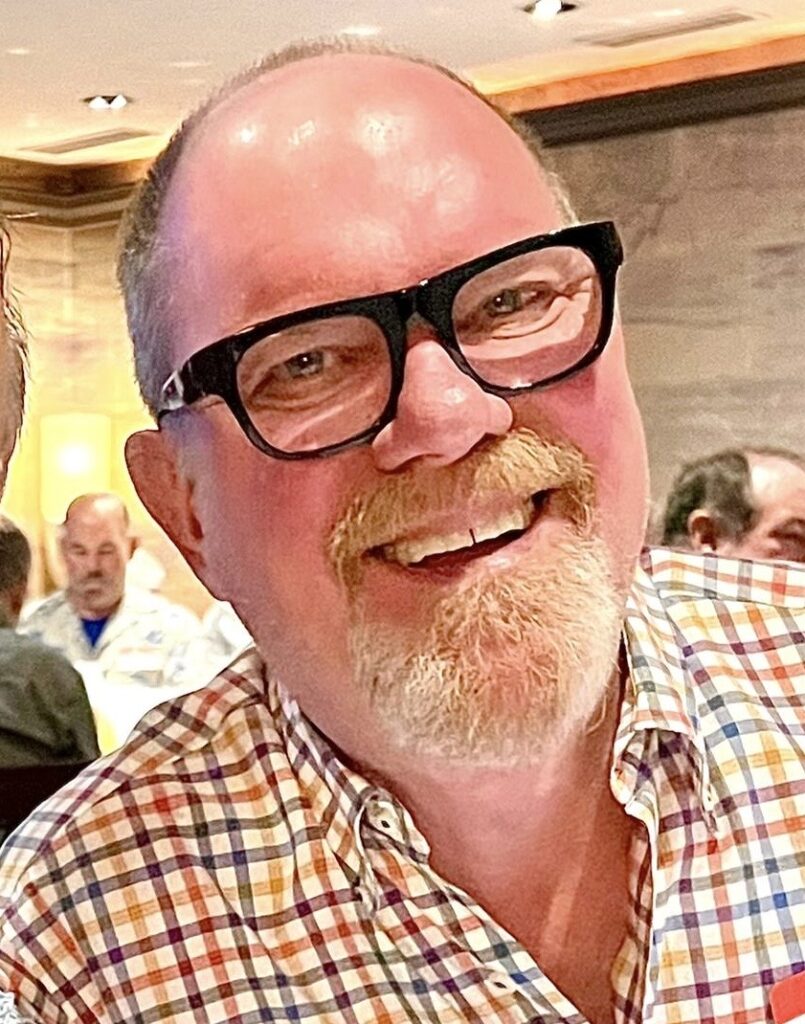
Eric Jacobson
After performing in parades at Disneyland, Eric Jacobson began his career as a Disney Imagineer at WED Enterprises (now Walt Disney Imagineering), building models of attractions for EPCOT Center. He then supervised the creation of Audio-Animatronics figures for Spaceship Earth, Kitchen Kabaret, Universe of Energy, World of Motion and many other opening day shows at EPCOT as well as Tokyo Disneyland. Eric was Art Director and concept lead for The Great Movie Ride, the first of many major attractions he would lead at the Walt Disney World and Disneyland Resorts.
Eric’s creative leadership shaped numerous projects around the world, including New Tomorrowland at the Magic Kingdom, The Twilight Zone Tower of Terror, Rock ‘n’ Rollercoaster starring Aerosmith, Toy Story Midway Mania!, Test Track, Mission: Space, Mickey’s PhilharMagic, Blizzard Beach and New Fantasyland. He also lead the creative effort for the re-conceptualization of Disney’s California Adventure in Anaheim and was responsible for resort and hotel designs in Florida and California including Disney’s Art of Animation Resort, Disney’s Grand Floridian Resort Villas and Disney Springs.
Before retiring from Disney after nearly five decades, Eric contributed his many years of knowledge and expertise to the completion of Shanghai Disneyland.
Eric lives in Las Vegas, Nevada and Rancho Mirage, California, where he volunteers for various charity organizations including DAP Health and the USO.

Mike West
Mike West is a rare blend of talent whose 40+-year career spans a bridge of extraordinary experiences built upon a lifetime of work with two legendary companies – Walt Disney Imagineering and Universal Creative.
Mike returned to lead Innovative West following his retirement from Universal after more than fourteen incredible years as an Executive Producer. He led the Blue-Sky Development of the largest and most ambitious project in the company’s history – Universal’s EPIC UNIVERSE. Once EPIC headed to the field, he took over creative development for projects featuring DreamWorks Animation properties, as well as Fast & Furious, a worldwide, blockbuster film franchise.
Mike joined the Universal Creative Studio in 2006 as Show Producer for The Simpsons Ride at both Universal Orlando and Universal Studios Hollywood.
Mike’s past projects also included creative development and integration of the Disney PhotoPass imaging business at Disney Parks & Resorts; the Moteurs Action Stunt Show Spectacular and the Disney Channel Production Tour at the Walt Disney Studios Park at Disneyland Paris; and Who Wants to Be A Millionaire-Play It!, formerly at Disney’s Hollywood Studios and Disney California Adventure.
Additionally, Mike wrote, directed and/or produced Sounds Dangerous at Disney’s Hollywood Studios; multiple shows for Innoventions at EPCOT; The ExtraTERRORestrial Alien Encounter, formerly at the Magic Kingdom; Song of the Rainforest at Disney’s Animal Kingdom; and the Indiana Jones Epic Stunt Spectacular at Disney’s Hollywood Studios. He also wrote the beloved Albert Awol dialogue that was used at the World Famous Jungle Cruise from 1991 until the most recent refurbishment of the attraction.
Mike is also a contributing author on several books about Walt Disney Imagineering and its creative process, including The Imagineering Way, Ideas to Ignite Your Creativity, and The Imagineering Workout, Exercises to Shape Your Creative Muscle.

Greg Kadorian
Greg Kadorian worked for Walt Disney Imagineering for over 35 years. Imagineering provides master planning, creative development, design, engineering, production, project management, and R&D for Disney “Theme Parks and Resorts” worldwide. At Imagineering he received several patents for Star Tours. He has developed many of the audio and video technologies in use at Disney Theme Parks. Greg has received the Themed Entertainment Association award for:
- 2002 Soarin’ Over California, Disney’s California Adventure
- 2014 Mystic Manor, Hong Kong Disneyland
- 2017 Pirates of the Caribbean: Battle for the Sunken Treasure, Shanghai Disneyland Resort
Major projects completed include:
- Imagination Pavilion, Epcot Center
- Star Tours Disneyland and Tokyo Disneyland
- Splash Mountain, Tokyo Disneyland and Walt Disney World
- Visionarium and ToonTown, Tokyo Disneyland
- Kali River Rapids, Disney’s Animal Kingdom
As Director of Audio/Video Engineering, Greg led the engineering team responsible for AV systems for major theme parks, including:
- Disney California Adventure
- Hong Kong Disneyland
- Shanghai Disney Resort

Jim Mulder
A 30-year veteran of the themed entertainment industry, was a Senior Principal Designer and Principal Special Effects Designer for Walt Disney Imagineering for more than twenty years. In that role, he took the creative lead on developing, designing, and installing special effects for Walt Disney Imagineering projects beginning with the opening of EPCOT Center and continuing up to Shanghai Disneyland. Among the highlights of Jim’s portfolio is his work on visual effects for Journey Into Imagination, The American Adventure, Spaceship Earth, the Living Seas, and the Norway pavilion’s Maelstrom attraction at EPCOT Center; management of design, production, and installation of visual effects and theatrical systems for Mickey’s Philharmagic 3-D show at Disney parks around the world; and management of design, production, and installation of visual effects and theatrical systems for “It’s Tough to Be a Bug” at Disney’s Animal Kingdom. As part of the Disney-MGM Studios project, James contributed extensively to the design, fabrication and installation of visual effects for The Great Movie Ride and MuppetVision 3-D. For their efforts, James and his team won the TEA award winners for outstanding achieve for Special Effects for “It’s Tough to be a Bug”. James continues to work at the vanguard of visual effects technology in the themed entertainment industry for a variety of clients including work on the Shanghai Disneyland project and with Universal Studios Creative.